How to Sleep Comfortably in Your Car
As an Amazon Associate I earn from qualifying purchases.
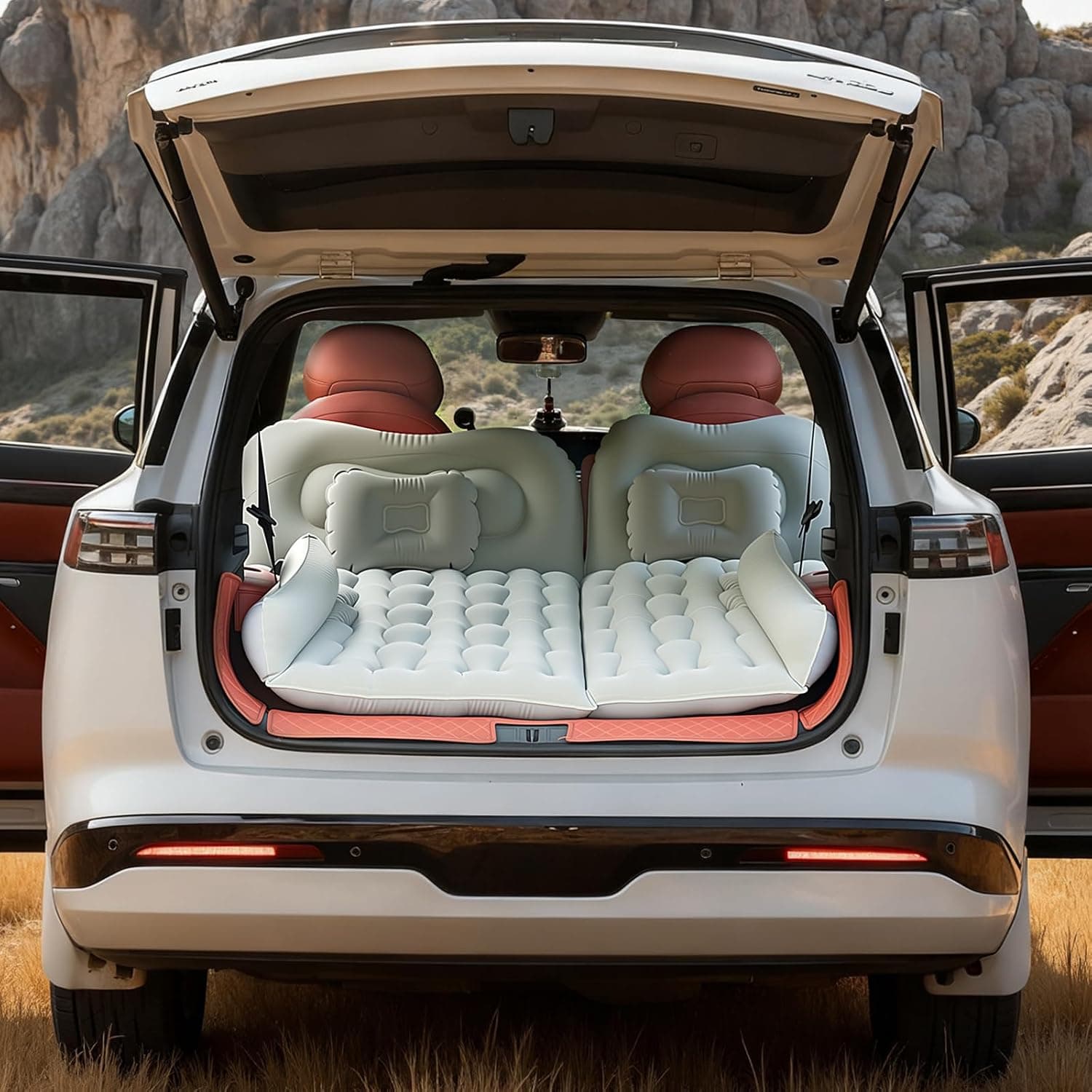
Sleeping in a car is either miserable or genuinely great, and the difference is about ninety minutes of preparation. The people who wake up wrecked tried to sleep across seats under a jacket; the people who wake up rested built a flat platform, controlled the light, and cracked the right windows. Here is the whole system, in the order that matters.
Step 1: make it flat
Fold the rear seats and study what you have. Most SUVs and hatchbacks leave a gentle slope or a gap behind the front seats; fill gaps with duffel bags or firewood boxes before any mattress goes down, because every air mattress telegraphs the hole beneath it by morning.
Park nose-uphill if the ground slopes. Your head goes to the high side, and blood staying out of your sinuses is worth more than any pillow upgrade.
Step 2: the mattress decides the night
A purpose-shaped SUV air mattress fills the cargo area including the wheel-well cutouts, and multi-chamber models let each sleeper pick a firmness. A thick self-inflating pad is the other strong answer: warmer, quieter, and immune to slow leaks, at the cost of trunk bulk.
Whichever you choose, expect overnight pressure drop as the air cools - top up before bed or accept a softer morning. That is physics, not a defect.
Step 3: windows - dark, private, and cracked
Light and eyes are solved with covers: magnetic blackout panels on framed windows, stretch-mesh socks anywhere, and a reflective accordion shade for the windshield. But the mistake beginners make is sealing the car shut.
Two adults exhale roughly a liter of water overnight, and a sealed cabin becomes a dripping greenhouse by 3 am. Crack two windows an inch behind mesh screens - cross-ventilation without bugs - and you wake to dry glass.
Step 4: temperature, both directions
Cold: sleep in a bag rated 10F below the forecast, on top of insulation (R-value 4+), never with the engine running. Heat: a battery fan moving air across you is worth ten degrees, and parking in tomorrow-morning shade beats any gadget.
Your car is a metal box: it will be colder than a tent at dawn and hotter by 8 am. Plan bedding for the dawn number and shade for the morning one.
Step 5: the legal and social layer
Where you sleep matters as much as how. Established campgrounds and dispersed camping on national forest and BLM land are straightforwardly legal; city streets and trailheads usually are not, and rest-stop rules vary by state. Apps and forums maintained by the car camping community stay current on where overnighting is welcome.
Wherever you park: arrive late, leave early, keep the site invisible, and the world stays friendly to car sleepers.