Husqvarna 13" Hatchet, Small Axe with Leather Sheath and Hickory Handle Review (2026)
Updated September 14, 2026 · Research-based review
Our verdict
A forged Swedish steel hatchet on a hickory handle for splitting kindling and processing camp firewood, not felling trees. The head holds an edge well and the leather sheath protects it in a pack, but the wood handle needs occasional oiling and the factory edge benefits from a touch-up before first use.
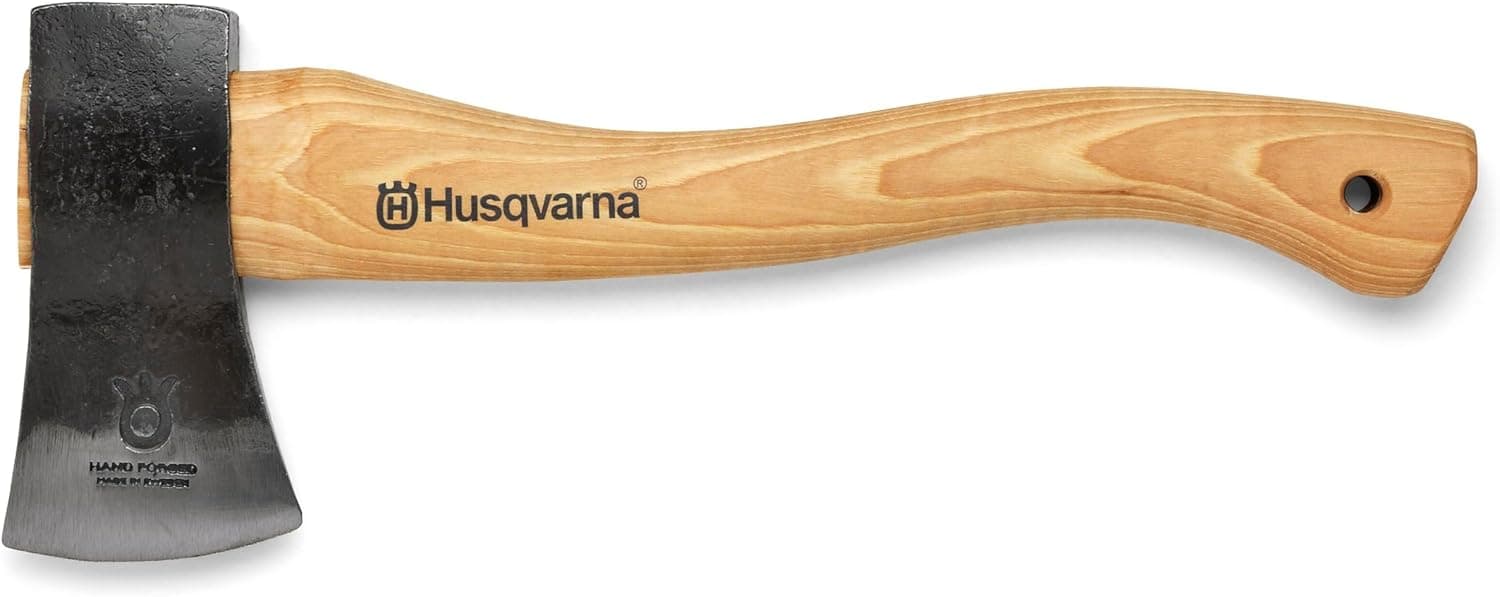
Husqvarna's 13" hatchet is a small axe with a leather sheath and hickory handle for traditional camp wood processing.
Price range: $$ (Mid-range)
What we liked
- + Hickory handle absorbs shock better than steel
- + Leather sheath protects the blade and your gear
- + Husqvarna forged head holds an edge well
Trade-offs
- - Wooden handles can loosen in dry conditions
- - Needs regular sharpening for best performance
Where this hatchet earns its keep
This is a small camp axe built for the jobs that come up around a fire ring rather than in the woodlot: splitting fatwood and kindling, trimming tent stakes, batoning small branches for a stove, or driving a stake with the flat of the poll. The head weighs a little over a pound and the whole tool comes in around two pounds, light enough to keep in a truck bin or pack pocket without adding real weight. It is not a substitute for a full-size felling axe or a bow saw if you need to process larger rounds, and it will not out-chop a heavier maul. Think of it as the tool you reach for a dozen times a weekend for small chores rather than the one you use once for a big job.
Forged head, hickory handle, leather sheath
The head is hand forged from Swedish steel and fitted to a curved hickory handle, a traditional pairing that Husqvarna and several Scandinavian axe makers still use because hickory absorbs shock from repeated strikes better than a solid steel or fiberglass handle does. The handle is secured with both a wood and a steel wedge, the standard method for keeping a head from working loose over years of use. A snap-closed leather sheath covers the edge in storage and transport, protecting both the blade and whatever else shares the same bag or bin. Overall length runs close to 13 to 15 inches depending on how it is measured, putting it firmly in the one-hand hatchet category rather than a two-hand hiking axe.
Setup, sharpening and handle care
Out of the box the edge is usable but not shaving sharp, so plan on a few passes with a puck stone or file before your first trip if you want clean splits rather than crushed ones. Wipe the head dry after wet use to keep surface rust off the forged steel, and periodically rub linseed or boiled tung oil into the hickory handle, especially if you camp somewhere hot and dry. Wood swells and shrinks with humidity, and an unoiled handle in a dry climate is the main reason wedged heads eventually loosen. Store it in the leather sheath in a dry bag rather than a damp trunk corner, and always follow the included safety guidance for striking and carrying an edged tool around a campsite.
How it stacks up against steel-handled rivals
Against the ESTWING Sportsman's Axe, a one-piece forged steel hatchet with a molded grip, the trade-off is direct: Estwing's steel handle cannot loosen or split, but it transmits more shock into your hand on a hard strike, while this hickory handle dampens vibration at the cost of needing occasional oil and a watchful eye for movement at the head. Compared with the lighter Fiskars X7, which uses a composite handle and a thinner blade geometry aimed at fast kindling splitting, the Husqvarna feels more traditional and slightly heavier in the head, which helps it bite deeper into denser wood. None of these differences make one wrong, they just suit different camping styles and maintenance habits.
Verdict and who should look elsewhere
For campers who like a traditional forged hatchet and do not mind a five-minute maintenance routine now and then, this is a well-built, fairly priced option that punches above its cost against pricier European hatchets. If you want zero maintenance and do not care about vibration damping, the steel-handled ESTWING models remove the handle-care question entirely. If your priority is shaving weight for backpacking rather than car camping, the lighter Fiskars X7 is worth a look instead. Buyers in very dry climates who plan to leave gear in a hot trunk for long stretches should factor in the extra handle care this style of hatchet asks for.
Frequently asked questions
Does the Husqvarna hatchet come sharp out of the box?
It arrives with a usable but not razor edge, so a few passes with a sharpening stone before your first trip is worth the five minutes.
Will the hickory handle loosen over time?
It can if the wood dries out, which is why periodic oiling with linseed or tung oil is recommended, especially in hot, dry climates.
Is this hatchet big enough to split firewood rounds?
It is sized for kindling, small branches and camp chores rather than splitting large rounds, which is better suited to a full-size axe or maul.
How should I store the hatchet between trips?
Keep it in the included leather sheath in a dry bag or bin, and follow the manufacturer's guidance for safe handling and storage of an edged tool.
Prices change often, so check the current price and availability on Amazon.
Check price on AmazonCar Camp Picks may earn a commission from the link above.