Sea to Summit Comfort Plus Self-Inflating Foam Pad Regular Review (2026)
Updated September 14, 2026 · Research-based review
Our verdict
The Sea to Summit Comfort Plus Regular is a single-width self-inflating foam pad for solo car campers who want more cushioning than the brand's entry-level Camp series without stepping up to a two-person mattress. It insulates and self-inflates reliably, though the extra foam adds bulk and cost that casual weekend campers may not need.
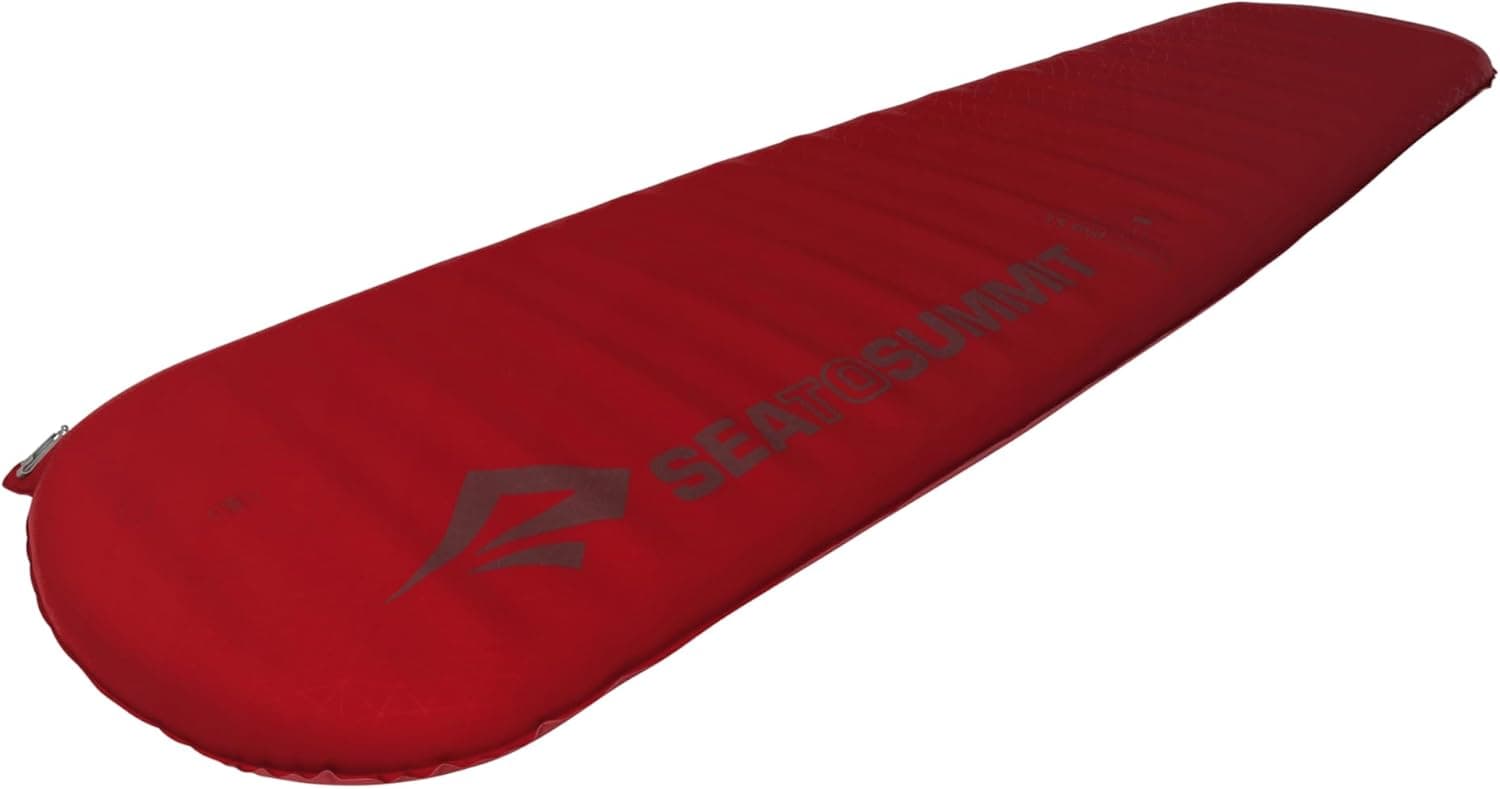
Sea to Summit Comfort Plus self-inflating foam pad in regular, a thicker and plusher step up from the Camp series.
Price range: $$$ (Premium)
What we liked
- + Comfort Plus adds more cushioning than the Camp and Camp Plus mats
- + Self-inflating foam base insulates well on cool nights
- + Premium materials make it a long-term pad for regular campers
Trade-offs
- - Costs more than the Camp series, so casual campers may not need it
- - Thick foam takes extra effort to squeeze out and roll tight
Who this pad is built for
This is a single, tapered sleeping pad sized for one person, aimed at car campers and backpackers who want noticeably more cushioning underfoot than a basic foam mat but do not need the width or weight of a two-person mattress. Because it is self-inflating rather than a pure air pad, it suits campers who want a reliable, consistent surface without worrying about a leak ruining the night, and who are willing to trade some packed size for that reliability. It is a good match for anyone stepping up from a thin backpacking pad to something they can use comfortably for a week at a campground, or for couples who each want their own pad rather than sharing one wide mattress. Ultralight backpackers chasing minimum pack weight will likely find lighter options elsewhere in this guide.
Size, thickness, and what is inside it
In the regular tapered size, the pad measures about 72 by 20 inches and is three inches thick, weighing around 2.1 pounds and packing down to roughly 6.5 by 11 inches. Sea to Summit rates it with an R-value in the low-to-mid 4 range, suitable for most three-season car camping and cool nights rather than deep winter use. The pad uses the brand's Delta Core foam technology, which removes a significant portion of the foam's mass while keeping the top and bottom surfaces intact, aiming to cut weight and packed bulk without sacrificing how the pad holds up over time. A multi-function valve handles fast inflation, one-way deflation for quick packing, and fine air pressure adjustment on top of the self-inflating foam. The pad ships with a stuff sack, a field repair kit, and PillowLock patches for attaching a Sea to Summit pillow.
Setting up and caring for it at camp
Self-inflating foam means opening the valve and letting the pad expand mostly on its own, then adding a few breaths or pump strokes to firm it up to preference, which is faster and less effort than fully inflating an air-only pad by mouth. The reversible valve makes deflating and rolling it back up for packing straightforward, since air vents out in one direction while you compress the foam by hand or knee. Between trips, Sea to Summit's general guidance for its self-inflating pads is to store them unrolled or loosely rolled with the valve open, which helps the foam recover its full loft and extends its working life compared with leaving it compressed in a stuff sack for long periods. The included repair kit covers small punctures in the field without needing a full pad replacement.
Where it costs more and how it compares
The Comfort Plus line sits above Sea to Summit's own Camp Plus mats in this guide, adding more cushioning and a plusher feel at a higher price, which is the main tradeoff for campers deciding between the two. Squeezing the thicker foam back down for packing also takes a bit more effort than a thinner mat. Compared with the Klymit Insulated Double V in this guide, this single-width foam pad trades packability for a steadier, more consistent sleeping surface, since a foam core does not shift or need topping off overnight the way an air chamber can. Against the brand's own Camp Plus Regular, the difference comes down to how much plushness a camper wants to pay and pack for; occasional weekend campers may not notice enough benefit to justify moving up from the Camp Plus.
Bottom line for car campers
Our score of 8.4 out of 10 reflects a pad that does exactly what a step-up self-inflating mat should: more comfort than an entry-level foam pad, reliable warmth for most car camping conditions, and materials built to last multiple seasons. It is the right pick for a camper who sleeps at the site often enough to justify paying for extra plushness and who values a foam pad's steady, leak-proof feel over an air pad's smaller packed size. Casual campers who only head out a few times a year, or anyone tight on cargo space, may get better value from the Camp Plus in the same lineup, while campers sharing a bed should look at the two-person Comfort Plus mattress instead.
Frequently asked questions
What size is the Sea to Summit Comfort Plus Regular pad?
In the regular tapered size it measures about 72 by 20 inches and is three inches thick, weighing around 2.1 pounds and packing to roughly 6.5 by 11 inches.
Does the Comfort Plus pad self-inflate on its own?
Yes, opening the valve lets the foam expand mostly by itself, and a few extra breaths or pump strokes firm it up the rest of the way.
How is the Comfort Plus different from the Camp Plus mat?
The Comfort Plus uses thicker foam for a plusher feel and costs more, while the Camp Plus is the brand's more affordable step below it in the same self-inflating lineup.
What comes included with the pad?
It ships with a stuff sack, a field repair kit for patching small punctures, and PillowLock patches for attaching a compatible Sea to Summit pillow.
Prices change often, so check the current price and availability on Amazon.
Check price on AmazonCar Camp Picks may earn a commission from the link above.