DJI Power 1000 Portable Power Station 1024Wh 2200W Review (2026)
Updated September 14, 2026 · Research-based review
Our verdict
The DJI Power 1000 fits car campers who want to run a fridge, cook on an induction hob and charge devices for several days from one mid-size station. Its main strength is a high stable output for its capacity, while the main trade-off is that DJI is a newer name in power stations than long-running competitors in this category.
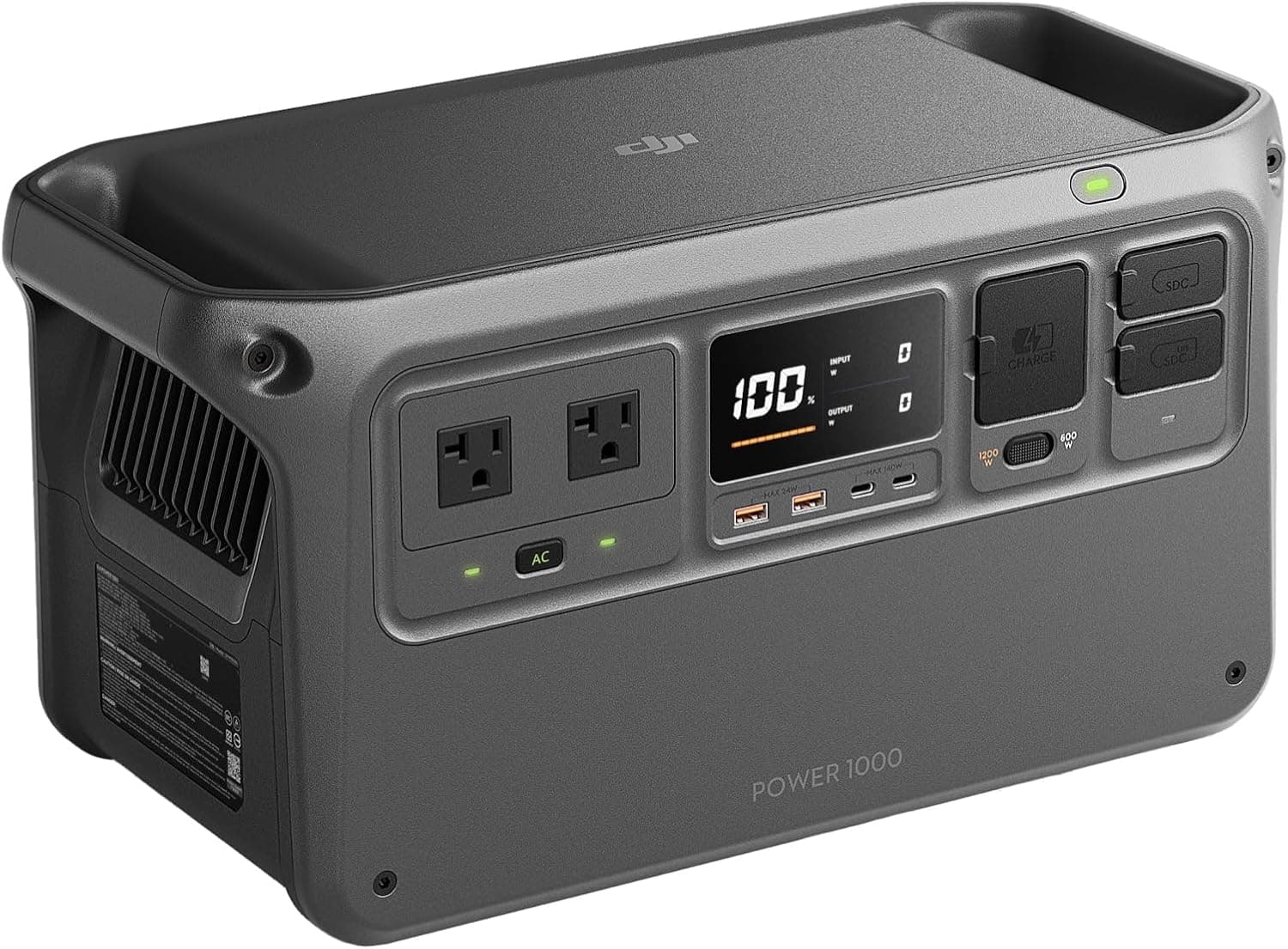
DJI Power 1000 offers 1024Wh and 2200W output, a strong mid-size station for campers running fridges, laptops and cooking appliances.
Price range: $$$ (Premium)
What we liked
- + 2200W output powers induction hobs and electric kettles at camp
- + 1024Wh capacity supports a fridge plus devices over several days
- + Competitive pricing for a station with this capacity and output
Trade-offs
- - DJI is newer to power stations than long-running brands like Jackery
- - Hefty enough that loading it in and out gets tiresome on short stops
Who this power station is for
The Power 1000 is sized for campers who need more than a phone-charging power bank but do not want the bulk of the largest stations on the market. Its 1024Wh capacity and a stable 2200W output, with peak output up to 4400W according to DJI's own specifications, can run a camp fridge alongside laptops, lights and a kettle or induction hob at the same time. That makes it a good fit for extended car camping trips or group sites where several people share power off one unit. Solo campers who only need to charge phones and run a headlamp are better served by a smaller, lighter station, since this one weighs roughly 13 kilograms and is built for capacity over portability.
Battery, output and charging specs
DJI's own specification page lists an LFP, or lithium iron phosphate, battery rated to maintain over 70 percent capacity after 4000 charge cycles, which points to a long usable life compared with older lithium-ion chemistries. The station measures about 448 by 225 by 230 millimeters and weighs close to 13 kilograms. Output includes multiple AC outlets alongside USB-C and USB-A ports for charging phones, laptops and camera gear, plus DJI-specific SDC ports for fast-charging select DJI drone batteries in the field. The stable 2200W AC output is enough for most camp kitchen appliances that would trip a smaller 1000W-class station, which is the main reason this unit earns a strong score on features despite sitting in a mid-capacity tier.
Living with it at camp
In daily use, the Power 1000 works best set up once at a base camp site rather than moved constantly between locations, given its weight. Plug in a fridge overnight, run a kettle or hob at meal times, and top off phones and laptops through the USB ports, all without switching outlets or worrying about tripping the output like you might with a smaller unit. Recharging speed depends on your input source, whether wall power, a vehicle outlet or solar panels, and DJI markets fast recharge times when using higher-wattage AC input. Keep the unit out of direct rain and extreme heat, and let it cool between heavy loads, as with any lithium-based power station, to protect long-term battery health.
How it compares with other power stations
Against rivals in the same capacity class, the DJI Power 1000 sits near the top of the field. The BLUETTI AC180 offers a similar 1152Wh capacity with 1800W output, giving slightly more capacity but less peak power. The Jackery Explorer 2000 v2 and DJI's own Power 2000 both step up to roughly double the capacity for campers who need multi-day runtime for larger loads, at added weight and cost. The EcoFlow RIVER 2 Pro undercuts the Power 1000 on capacity at 768Wh but is lighter and easier to carry solo. For campers who want strong output without stepping up to a 2000Wh-class unit, the Power 1000 lands in a useful middle ground.
Verdict and who should pick something else
This station earns our score of 8.8 out of 10 for pairing a strong 2200W stable output with a mid-size 1024Wh capacity and a long-life LFP battery, making it a capable base-camp power source for small groups running a fridge and cooking gear. Choose it if you want more headroom than an entry-level 1000W station without the weight and price of a 2000Wh unit. Solo campers who only charge small devices should look at a lighter station instead, and anyone running a fridge for a week or more without recharging should size up to the Jackery Explorer 2000 v2 or DJI's own Power 2000 for more total capacity.
Frequently asked questions
What is the battery chemistry in the DJI Power 1000?
It uses an LFP, or lithium iron phosphate, battery, which DJI rates to retain over 70 percent capacity after 4000 charge cycles.
Can it run an induction hob or kettle at camp?
Yes, its stable 2200W AC output, with peak output up to 4400W, is enough for most single camp kitchen appliances.
How heavy is it to move in and out of a vehicle?
It weighs close to 13 kilograms according to DJI's specifications, so it is manageable for one person but not something you want to carry far or often.
How does it compare with the Jackery Explorer 2000 v2?
The Jackery offers roughly double the capacity at 2042Wh for longer multi-day runtime, while the DJI Power 1000 is lighter and less expensive for shorter trips.
Prices change often, so check the current price and availability on Amazon.
Check price on AmazonCar Camp Picks may earn a commission from the link above.