Coleman 4-N-1 Self-Inflating Camp Pad Review (2026)
Updated September 14, 2026 · Research-based review
Our verdict
Coleman's 4-N-1 pad ships as two interlocking sections that snap together for a single pad, a doubled pad, two separate pads, or a connected lounger. That flexibility suits families and casual campers, though the seam offers less cushion than the rest of the pad and it is bulkier than a single piece design.
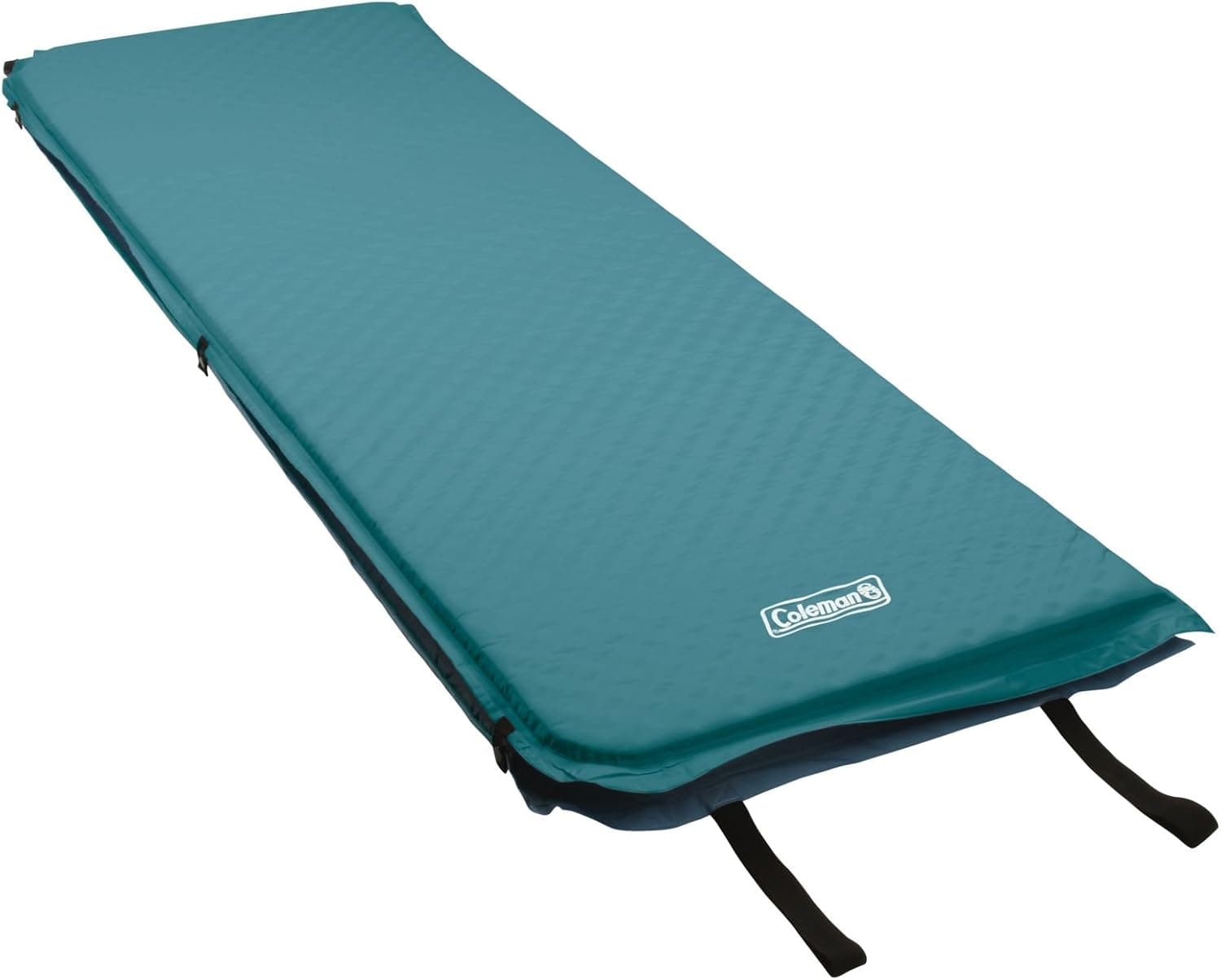
Coleman's 4-N-1 self-inflating camp pad that can be used in several configurations for sleeping or lounging.
Price range: $$ (Mid-range)
What we liked
- + 4-N-1 design adapts to single, double-thick or lounge setups
- + Versatility means one purchase covers sleeping and campfire sitting
- + Self-inflating foam makes setup simple for beginners
Trade-offs
- - Multi-use layout means more straps and parts to figure out
- - Heavier than a single pad, so it is better for car camping only
Who this multi-use pad fits
Coleman's 4-N-1 pad fits campers who want one purchase to cover more than one job at the campsite, whether that means a single sleeping pad, a doubled up pad for extra cushion, or two separated pads for a pair of sleepers. Because the design relies on interlocking pieces rather than a single sheet of foam, it suits families and casual car campers who value flexibility over the simplest possible setup, and who are comfortable with a slightly bulkier roll in exchange for that versatility. It is a reasonable starting pad for beginners who do not want to buy a separate sleeping pad and a separate lounge pad for sitting around the fire. Campers who want the most compact, lightest possible single pad, or who camp solo most of the time, will likely find the extra parts and bulk more than they need.
How the four configurations work
The pad is built from Coleman's self-inflating foam construction, using a free flow valve that lets the foam expand on its own once opened, with a few extra breaths bringing it to full firmness. What sets the 4-N-1 apart from a standard single pad is that it ships as two separate, interlocking pad sections that snap together, so the same pad can be set up as one single width sleeping surface, a doubled up thicker pad for one person, two separate pads for two sleepers, or a connected lounging surface, giving the four configurations the name refers to. This design trades some simplicity for flexibility, since there are more straps and connection points to manage than on a single piece pad. It comes in a teal colorway and packs down into a roll for storage between trips.
Setup, sleeping on it, and storage
Setting the pad up follows the standard self-inflating process, opening the valve and letting the foam expand largely on its own, though this style of Coleman pad can take a full day or more sitting open before the foam reaches its maximum loft, so it helps to unroll it well before bedtime on the first night of a trip. Snapping the two sections together for a doubled up or connected configuration takes a bit of extra setup time compared with a single piece pad, and the seam where the two pads connect offers less cushion than the rest of the surface, which can be felt if a sleeper ends up positioned right on that connection point. Rolling the pad back down for storage takes more effort than a single thin pad given the added bulk of the interlocking pieces, so it packs best in a vehicle rather than a backpack.
Versatility versus a single piece pad
Against the Klymit Insulated Double V and Sea to Summit's Comfort Plus and Camp Plus pads in this guide, all of which are single piece self-inflating or air chamber designs, the 4-N-1's main advantage is its configurable, multi-use layout rather than raw comfort or packed size. Those Sea to Summit and Klymit pads generally offer a more consistent, gap-free sleeping surface since there is no connecting seam to feel, and several of them use lighter, more technical materials aimed at frequent campers. The 4-N-1 instead trades some of that polish for versatility and a lower price point, making it a better fit for casual, occasional car campers than for anyone chasing the most refined sleep surface in the group.
Verdict for flexible car camping setups
Our score of 7.3 out of 10 reflects a genuinely flexible pad that covers more use cases than most single piece pads in this guide, at the cost of some bulk and a noticeable seam between its two sections. It is a solid pick for families or casual campers who want one pad that can flex between sleeping and lounging setups without buying separate gear for each job. Campers who want the most consistent, gap-free sleeping surface, or the smallest possible packed size, will likely be happier with one of the single piece Sea to Summit or Klymit pads in this same guide. For its specific multi-use pitch, the 4-N-1 delivers on what it promises.
Frequently asked questions
What does 4-N-1 mean for this Coleman pad?
It refers to the pad's four configurations, using the two interlocking sections as a single pad, a doubled up pad, two separate pads for two sleepers, or a connected lounging surface.
How long does it take to fully inflate?
Opening the valve starts the process automatically, but reaching maximum loft can take a full day or more of sitting open, so unrolling it well before bedtime helps.
Is there a gap where the two pads connect?
The connecting seam between the two sections offers less cushion than the rest of the pad, which can be noticeable if a sleeper lies directly on that spot.
Is this pad better for car camping or backpacking?
It is built for car camping, since the interlocking sections add bulk that make it a poor fit for backpacking.
Prices change often, so check the current price and availability on Amazon.
Check price on AmazonCar Camp Picks may earn a commission from the link above.