MAXSA Metal Gripped Escaper Buddy Traction Boards 2-Pack Review (2026)
Updated September 20, 2026 · Research-based review
Our verdict
MAXSA's metal-gripped Escaper Buddy boards suit car campers who occasionally get stuck in mud, sand or snow and want extra bite over a plain plastic mat. The metal traction plates add real grip in slick spots, but they add weight and can mark paint if stowed carelessly.
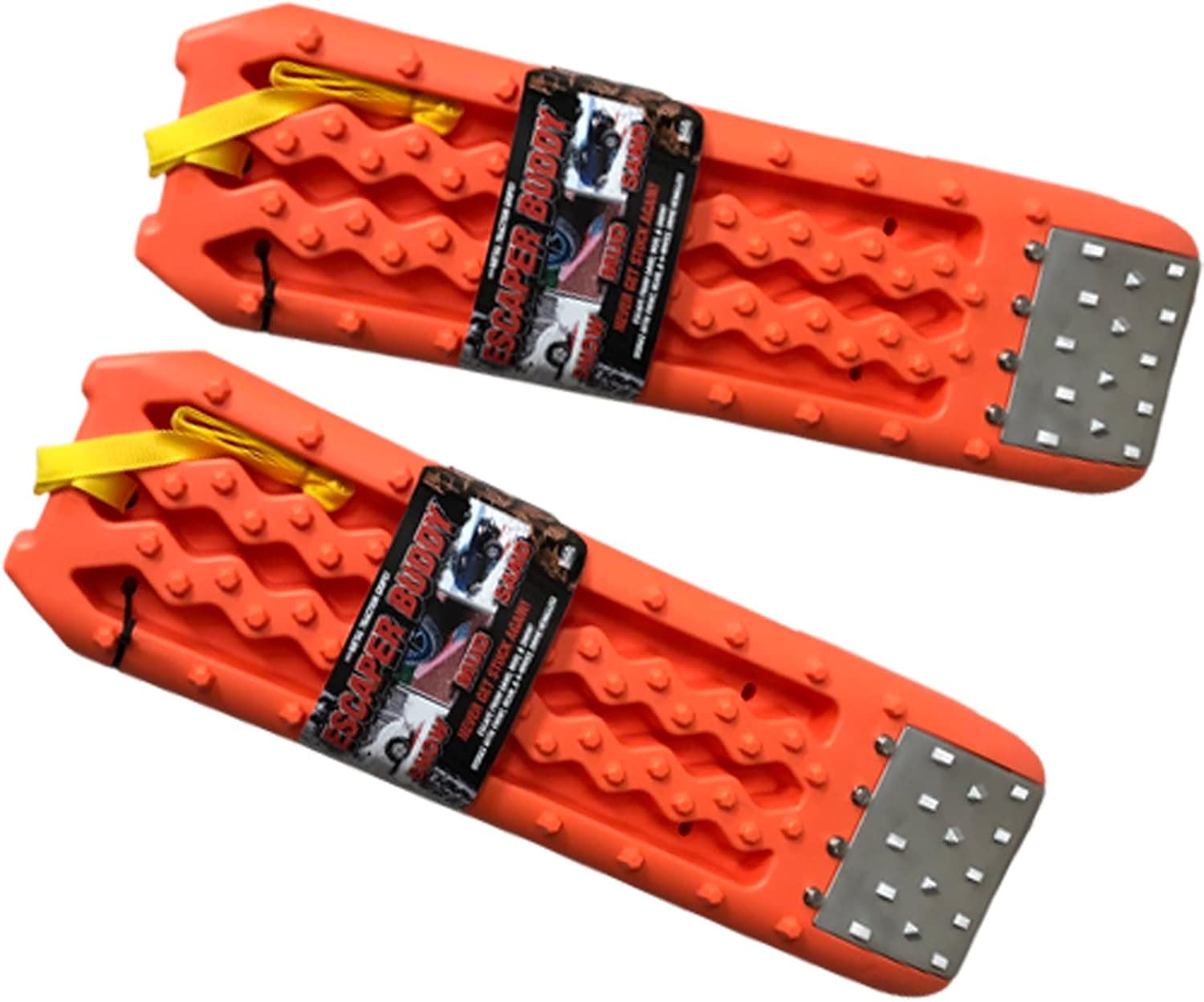
MAXSA metal gripped Escaper Buddy traction boards 2-Pack add metal grip teeth for extra bite in slippery conditions.
Price range: $$$ (Premium)
What we liked
- + Metal grips bite into tires for better traction
- + Handles double as digging tools for clearing sand in front of tires
- + 2-Pack lets both drive wheels get grip at once
Trade-offs
- - Metal teeth can scratch vehicle paint during stowing
- - Heavier than all-plastic traction mats when stored on a roof rack
How the metal grips work
Each Escaper Buddy board pairs MAXSA's raised plastic tread pattern with metal traction plates set into the ends of the board. According to MAXSA, the raised tracks keep tires from spinning across the board's surface while the metal plates bite into the board and the ground underneath, adding grip that plastic-only boards cannot match in truly slick mud or glare ice. The tread also runs on both sides of each board, so there is no wrong way to set one down in a hurry, which matters when you are kneeling in mud trying to get a wheel unstuck before dark. This two-sided, dual-material design is the main reason MAXSA sells this as a step up from its all-plastic traction mats.
Build, size and weight
MAXSA builds the boards from high-impact polypropylene, a material the company describes as lightweight, durable and strong enough for any type of vehicle, reinforced at the ends with the metal traction plates. According to MAXSA's own listing, each board measures 34 inches long, 9 inches wide and 2.75 inches thick, with a total weight of about 15.5 pounds per board, so the metal hardware adds noticeably more heft than an all-plastic mat of similar size. Each board also includes four mounting holes, letting you bolt the pair to a roof rack, bed rail or garage wall for storage instead of leaving them loose in the trunk. The bendable polypropylene body is meant to flex under a tire rather than crack in cold weather.
Using the boards for recovery and digging
Beyond traction, the flat handle-like shape of each board doubles as a digging tool for clearing sand or mud away from a tire before you set the board down, which saves packing a separate shovel for minor recovery jobs. Selling them as a 2-pack means both drive wheels on one axle can get a board at the same time, which is usually what actually frees a stuck vehicle rather than working one wheel at a time. That said, these are recovery aids for a soft-stuck vehicle rather than a substitute for a winch or tow strap; a vehicle buried to the frame or hung up on a rock or stump will need more than traction boards alone.
Storing and transporting the boards
The added weight from the metal plates is the main trade-off campers should plan around. At roughly 15.5 pounds each, a pair adds close to 30 pounds to a roof rack or cargo box, more than an all-plastic traction mat of the same footprint, so a roof-mounted mount or under-seat storage in a truck is worth considering over a light rooftop bag. The metal teeth that give these boards their grip can also scratch paint, plastic trim or other gear if the boards are tossed loosely into a trunk after a muddy recovery; a dedicated storage bag or the mounting holes for an exterior rack keep the metal edges away from painted surfaces during transport.
Who should choose the metal-gripped version
Campers who regularly deal with genuinely slick conditions, such as wet clay, packed snow or ice on a forest road, get the most benefit from the metal grip plates, since that is where plastic-only traction boards tend to spin in place. Weekend car campers who mostly worry about soft sand at a beach campsite may not need the extra weight and paint risk the metal plates bring, and could be just as well served by an all-plastic Escaper Buddy mat from the same lineup. For anyone who tows a trailer or drives a heavier vehicle down rough access roads, the combination of digging-tool handles, mounting holes for rack storage and dual-sided tread makes this 2-pack a reasonable piece of standing recovery gear.
Frequently asked questions
Can these traction boards scratch my car?
The metal grip plates on the ends can scratch paint or trim if the boards are stored loosely, so use a bag or mount them externally after a muddy recovery.
How much does each traction board weigh?
MAXSA lists each board at roughly 15.5 pounds, heavier than the company's all-plastic traction mats of similar size.
Can I use these boards to dig out sand around a tire?
Yes, the flat board shape doubles as a digging tool for clearing sand or mud from around a stuck tire before placing the board.
Do I need one board or two to get unstuck?
MAXSA sells these as a 2-pack so both drive wheels on an axle can get traction at the same time, which is usually needed to free a stuck vehicle.
Prices change often, so check the current price and availability on Amazon.
Check price on AmazonCar Camp Picks may earn a commission from the link above.