Anker 522 Portable Power Station 299Wh 300W Review (2026)
Updated September 14, 2026 · Research-based review
Our verdict
A compact 299Wh, 300W LiFePO4 power station built to keep phones, tablets, headlamps and small electronics charged over a weekend trip. Its light weight and multiple output ports make it easy to live with at a campsite, but the 300W ceiling rules out kettles, heaters and higher-draw gear that bigger power stations can handle.
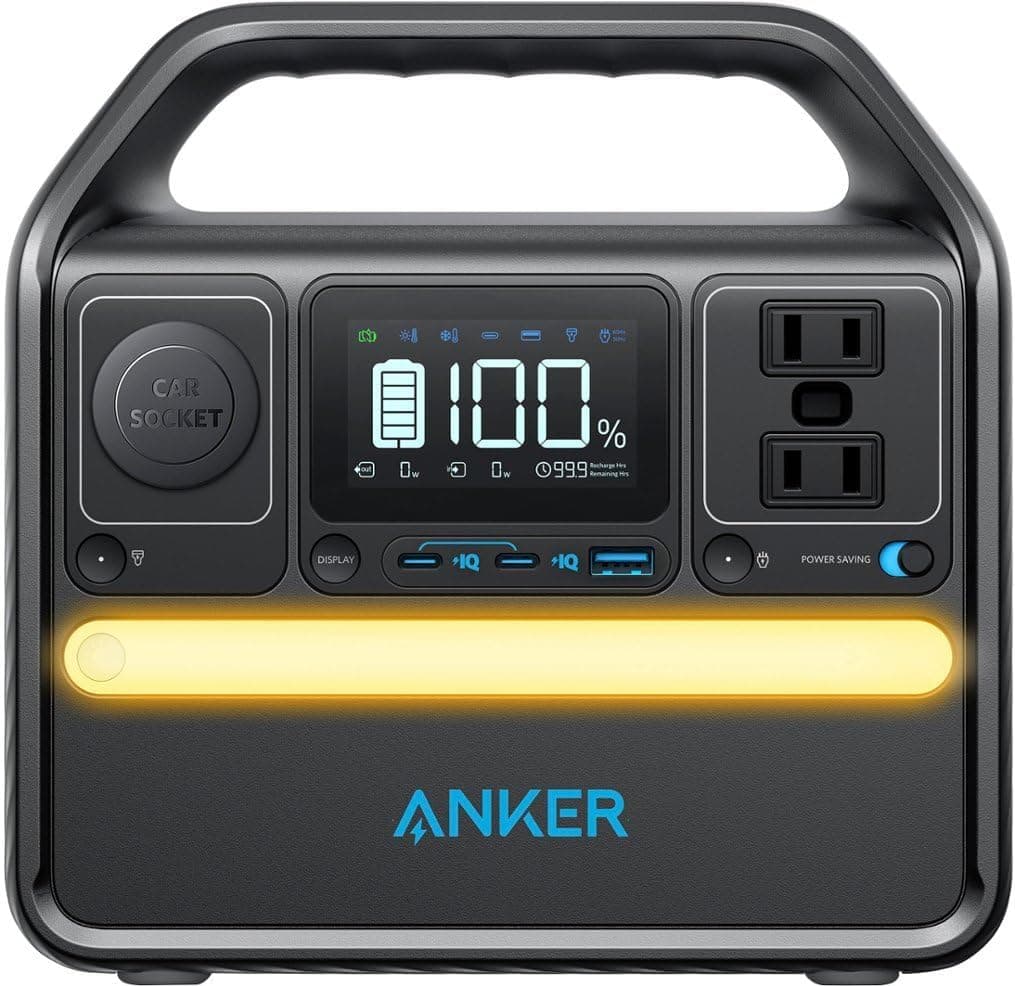
Anker 522 is a 299Wh, 300W portable power station, a compact budget pick for charging devices and running small camp electronics.
Price range: $$$ (Premium)
What we liked
- + 299Wh is enough to recharge phones, tablets and headlamps all weekend
- + 300W output runs small fans, string lights and a laptop charger
- + Anker's compact design fits easily on a car floor or seat
Trade-offs
- - 300W limit rules out kettles, heaters and most cooking gear
- - Small capacity drains quickly if you try to power a fridge
Sized for personal electronics, not camp appliances
This power station is built around a 299 watt-hour LiFePO4 battery, enough to recharge a phone dozens of times, keep a tablet and a headlamp topped off, or run a strand of string lights for an evening. Its continuous output is rated at 300W with a higher surge capability for a moment, which covers small fans, a laptop charger, or a camera battery charger without issue. It is not meant to run a cooler compressor, an electric kettle, or a space heater, all of which draw well past its output ceiling and would drain the battery in minutes rather than hours. Car campers who mainly need to keep devices alive rather than run kitchen gear are the target user here.
LiFePO4 battery, six ports, compact size
The LiFePO4 chemistry is built for a long cycle life, rated at 3000 or more charge cycles before capacity drops meaningfully, and it is generally more stable under heat than older lithium-ion power stations. It offers six output ports across two AC outlets, two USB-C ports and a USB-A port, so several devices can charge at once without a separate splitter or power strip. At roughly 8.6 pounds it is light enough to move from car to tent to picnic table without a struggle, closer to a large lunch cooler than a heavy generator. A monitoring system checks internal temperature up to 100 times per second, part of how Anker keeps a compact unit like this running safely at these outputs.
Charging it and keeping it topped off
It can be recharged from a wall outlet, a car's 12V socket, USB-C, or an optional solar panel, giving you a few different ways to top it off depending on where you are camping. Because the capacity is modest compared with larger units, it is worth charging it fully before every trip rather than assuming it will recharge fast enough from a small solar panel mid-weekend. Keep it out of direct sun and extreme heat when possible, as with any lithium battery pack, and follow Anker's charging and storage guidance in the manual for the longest service life. Its size makes it easy to store in a closet or trunk between trips without dedicating real space to it.
Where bigger power stations pull ahead
Against something like the BLUETTI AC180 or the Jackery Explorer 2000 v2, both of which offer multiple times the capacity and 1500W or higher continuous output, this Anker unit is clearly the budget and weight-focused option rather than the one built to run a fridge, an induction cooktop, or power tools. Those larger units cost significantly more and weigh several times as much, so the trade-off is capability for portability. For anyone who only needs to keep phones and small lights charged over a weekend, the extra capacity in those bigger stations goes largely unused, making this smaller unit the more sensible fit.
Verdict and who needs more capacity
This is a solid pick for weekend car campers who mainly need to keep personal electronics charged and want something light enough to carry to a picnic table without help. It also works well as a quiet backup power source at a campsite where a generator would be overkill or against site rules. If your trips involve running a portable fridge, cooking appliances, or multiple higher-draw devices at once, step up to a power station in the 1000Wh-plus range instead, since this unit's 300W ceiling and smaller battery will leave you short by day two of a longer or gear-heavy trip. For anyone unsure which size fits their trips, sketching out a rough tally of what needs charging over a typical weekend is the simplest way to decide before buying.
Frequently asked questions
Can the Anker 522 run a portable fridge or cooler?
Its 300W continuous output is generally too low to reliably run a compressor fridge for long, so it is better suited to phones, tablets, lights and other small electronics.
How many devices can it charge at once?
It has six output ports, two AC outlets, two USB-C ports and a USB-A port, so multiple devices can charge at the same time.
How do I recharge it while camping?
It can be charged from a wall outlet, a car's 12V socket, USB-C, or an optional solar panel, and following Anker's manual for charging guidance is recommended.
How heavy is the Anker 522?
It weighs about 8.6 pounds, light enough to move easily between a car, tent and picnic table.
Prices change often, so check the current price and availability on Amazon.
Check price on AmazonCar Camp Picks may earn a commission from the link above.