Goal Zero Yeti 500X 505Wh Portable Lithium Power Station Review (2026)
Updated September 20, 2026 · Research-based review
Our verdict
The Goal Zero Yeti 500X suits weekend car campers who want a compact, proven lithium power station for lights, devices and a camera kit rather than a full kitchen off grid. Its 505Wh LiFePO4 battery and track record are strong points, though newer rivals now offer more capacity and faster charging for similar or lower prices.
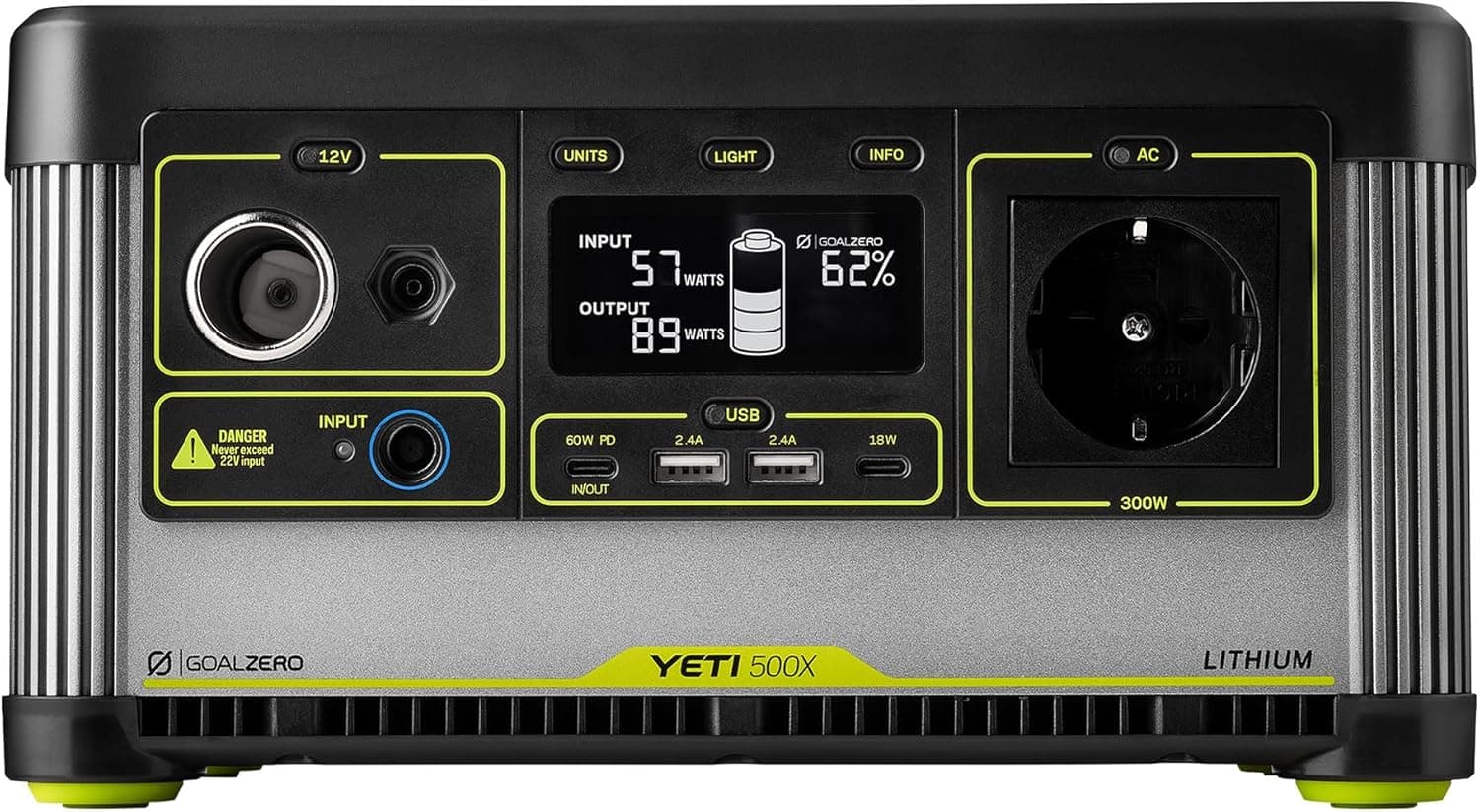
The Goal Zero Yeti 500X is a 505Wh portable lithium power station, a proven mid-size choice for weekend car camping power.
Price range: $$$ (Premium)
What we liked
- + 505Wh lithium capacity handles lights, devices and a camera kit
- + Established model with a long track record among overlanders
- + Compact carry size for a station in this capacity range
Trade-offs
- - Older design charges slower than newer stations from EcoFlow and DJI
- - Price is high for its capacity compared with newer competitors
Battery capacity and chemistry
The Yeti 500X carries a 505 watt-hour lithium iron phosphate, or LiFePO4, battery rated at 10.8 volts and up to 46.8 amp-hours, according to Goal Zero's own specifications. LiFePO4 cells are known for handling many more charge cycles than older lithium-ion chemistries, and Goal Zero backs this pack for more than 4,000 cycles to 80 percent of original capacity, meaning years of regular weekend use before the battery meaningfully degrades. At 505Wh, the capacity is enough to keep a string of camp lights running for several nights, recharge phones and cameras repeatedly, and run small 12V accessories, but it is not sized to run a portable fridge or CPAP machine for multiple full nights without a way to recharge it.
Size, weight and portability
Goal Zero lists the Yeti 500X at 12.9 pounds and 7.5 by 11.25 by 5.8 inches, a genuinely compact footprint for its capacity class that fits into a door pocket, cooler bag or small camp storage bin without dominating the trunk. That portability is one of the model's original selling points and remains a reason overlanders and van campers still choose it: it is light enough to move between a vehicle and a tent site by hand rather than needing a cart or two people to carry. The compact size does mean less battery per pound than some larger, newer stations, so buyers prioritizing maximum capacity for the size and weight should compare against current-generation competitors before deciding.
Output and charging
The built-in 120V AC inverter on the Yeti 500X is rated at 300 watts continuous with a 1200 watt surge rating, enough for laptop chargers, camera battery chargers, small fans and similar low-draw electronics, though it will not run high-wattage appliances like an electric kettle or hair dryer. A 12V car-style port and USB-C PD ports round out the output options for charging phones, tablets and USB-powered camp gear directly. Goal Zero rates the operating temperature range at 32 to 104 degrees Fahrenheit, worth noting for anyone camping in near-freezing conditions where battery performance and charge acceptance can drop outside that range.
How it compares to newer power stations
The Yeti 500X has been on the market longer than most of its current competitors, and that maturity is genuinely a strength: it has years of real-world use behind it and a wide base of accessories and reviews to draw on. The trade-off is that newer lithium stations from brands like EcoFlow, DJI and Bluetti now offer larger capacities, faster recharge times and, in several cases, lower prices per watt-hour than the 500X. Shoppers comparing strictly on capacity and charging speed for the money will likely find newer options look more competitive on paper, even though the Yeti's compact size and established reliability remain real advantages for some buyers.
Who should choose the Yeti 500X
This power station suits car campers and overlanders who want a small, dependable unit for lights, phones, cameras and other low-draw gear over a weekend trip, and who value its established reputation and compact size over having the largest capacity available. It is a reasonable pick for anyone who already owns Goal Zero accessories or solar panels designed around the Yeti ecosystem. Campers who need to run higher-wattage devices, charge back up quickly between trips, or want the most capacity for the price should compare current-generation stations before committing, since the 500X now competes against newer designs built specifically to beat it on cost and speed.
Frequently asked questions
How much can the Goal Zero Yeti 500X power?
Its 505Wh LiFePO4 battery and 300W continuous inverter suit lights, phones, cameras and small electronics, not high-wattage appliances.
How long does the battery last over time?
Goal Zero rates the LiFePO4 battery for more than 4,000 cycles to 80 percent of original capacity.
How much does the Yeti 500X weigh?
Goal Zero lists it at 12.9 pounds, making it compact and portable for its capacity class.
Is the Yeti 500X still competitive with newer power stations?
It remains a proven, compact option, but newer stations from other brands now offer more capacity and faster charging at comparable or lower prices.
Prices change often, so check the current price and availability on Amazon.
Check price on AmazonCar Camp Picks may earn a commission from the link above.