Goal Zero Yeti 500 Portable Power Station 499Wh Review (2026)
Updated September 14, 2026 · Research-based review
Our verdict
The Goal Zero Yeti 500 puts 499Wh of LiFePO4 capacity in a rugged, IPX4 rated case backed by a well known outdoor power brand and a 5 year warranty. It costs more than several rivals with similar capacity, and its 500W continuous output is not meant for heavy appliances like a hair dryer or kettle.
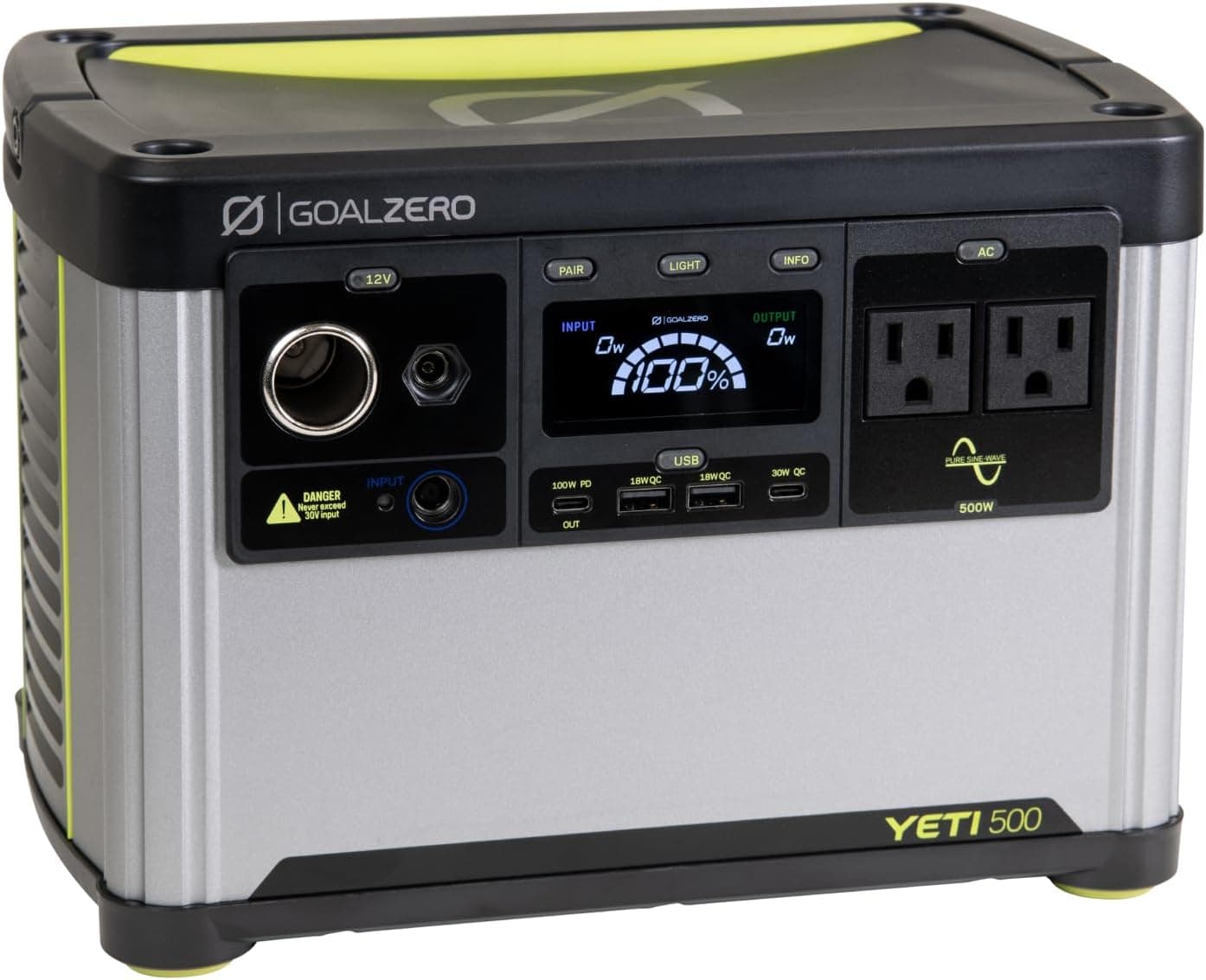
Goal Zero Yeti 500 is a 499Wh portable power station from a well-known outdoor power brand, sized for weekend camping loads.
Price range: $$$ (Premium)
What we liked
- + 499Wh runs a small fridge and charges devices for a night or two
- + Goal Zero has long experience building gear for outdoor use
- + Pairs with Goal Zero solar panels for a matched charging setup
Trade-offs
- - Priced higher than several rivals offering similar capacity
- - Not built for heavy appliances such as hair dryers or kettles
Who the Yeti 500 fits
Goal Zero rates this unit at 499.2Wh, built around LiFePO4 battery chemistry that the company rates for over 4,000 cycles to 80 percent of original capacity, aimed at campers who need to run small appliances and charge devices over a weekend without appliance-level power draw. At 16.1 pounds and roughly 11 by 8 by 8 inches, it is compact enough to carry into a tent or RV but heavier than the smallest power stations on the market. Goal Zero's IPX4 water resistance rating means it can handle light rain or splashes, which matters for gear that will sit outside a vehicle at a campsite rather than staying protected inside a trunk.
Power output and charging speed
The Yeti 500 outputs 500W continuous with a 1,000W surge rating through a pure sine wave inverter, enough for a portable fridge, lights, a fan or charging a laptop, alongside USB-C power delivery up to 100W, dual USB-C quick charge ports at 30W, dual USB-A ports at 18W and a 12V auxiliary output rated to 162W. Goal Zero states the combined maximum output across all ports reaches 770W. Charging speed varies by source: Goal Zero rates a fast AC charge at 1.4 hours using a 500W input, a slower 3 hour AC charge at 240W, about 2.8 hours with a 200W solar panel, and roughly 5 hours from a 10-amp car charger, giving campers several options depending on what power source is available.
Daily use and durability
In practice, the Yeti 500's continuous 500W rating covers small fridges, LED lighting, fans, laptops and phone charging for a night or two, but appliances that spike higher, like hair dryers, kettles or space heaters, will exceed its steady output even if the 1,000W surge briefly covers startup. Goal Zero rates the unit to operate for discharge across a wide -4 to 140 degree Fahrenheit range, useful for campers in varied seasons, though charging is restricted to a narrower 32 to 125.6 degree window. Goal Zero backs the Yeti 500 with a 5 year manufacturer warranty, a notably longer coverage period than many rival power stations offer, which signals confidence in the LiFePO4 cell's long term durability.
How it compares with rival power stations
Against similarly priced units like the EcoFlow RIVER 2 Pro at 768Wh, the Yeti 500 offers less stored capacity for a comparable or higher price, trading raw runtime for Goal Zero's brand reputation, 5 year warranty and matched solar panel ecosystem. Larger units like the BLUETTI AC180 at 1152Wh or the DJI Power 1000 at 1024Wh both offer roughly double the capacity at a similar or lower price point, which is worth considering if capacity matters more than brand history. Campers already invested in Goal Zero solar panels or who prioritize warranty length over raw watt-hours per dollar will find the Yeti 500 a more natural fit than switching ecosystems.
Verdict and who should pick something else
The Goal Zero Yeti 500 earns our score of 7.6 out of 10 for its long 5 year warranty, durable LiFePO4 cells and solid weather resistance from an established outdoor power brand. It suits campers who want dependable device charging and light appliance power for a weekend, especially those already using Goal Zero solar gear. Choose a higher capacity unit like the EcoFlow RIVER 2 Pro or BLUETTI AC180 instead if raw watt-hours per dollar matter more than brand or warranty length, since several rivals offer notably more stored capacity for similar money.
Frequently asked questions
What is the Yeti 500's battery capacity?
Goal Zero rates it at 499.2Wh using LiFePO4 cells rated for over 4,000 cycles to 80 percent of original capacity.
Can it run a hair dryer or kettle?
No, its 500W continuous output is not built for high-draw appliances like hair dryers or kettles, even with the 1,000W surge rating.
How long is the warranty?
Goal Zero backs the Yeti 500 with a 5 year manufacturer warranty.
How fast does it charge from solar?
Goal Zero rates roughly a 2.8 hour recharge using a 200W solar panel input.
Prices change often, so check the current price and availability on Amazon.
Check price on AmazonCar Camp Picks may earn a commission from the link above.