DJI Power 2000 Portable Power Station 2048Wh 3000W Review (2026)
Updated September 14, 2026 · Research-based review
Our verdict
The DJI Power 2000 suits campers, van dwellers and overlanders who want near household power at the site, whether that means a fridge, lights and a laptop for days or a backup for home appliances between trips. The size and weight mean it lives in the vehicle, not on your back.
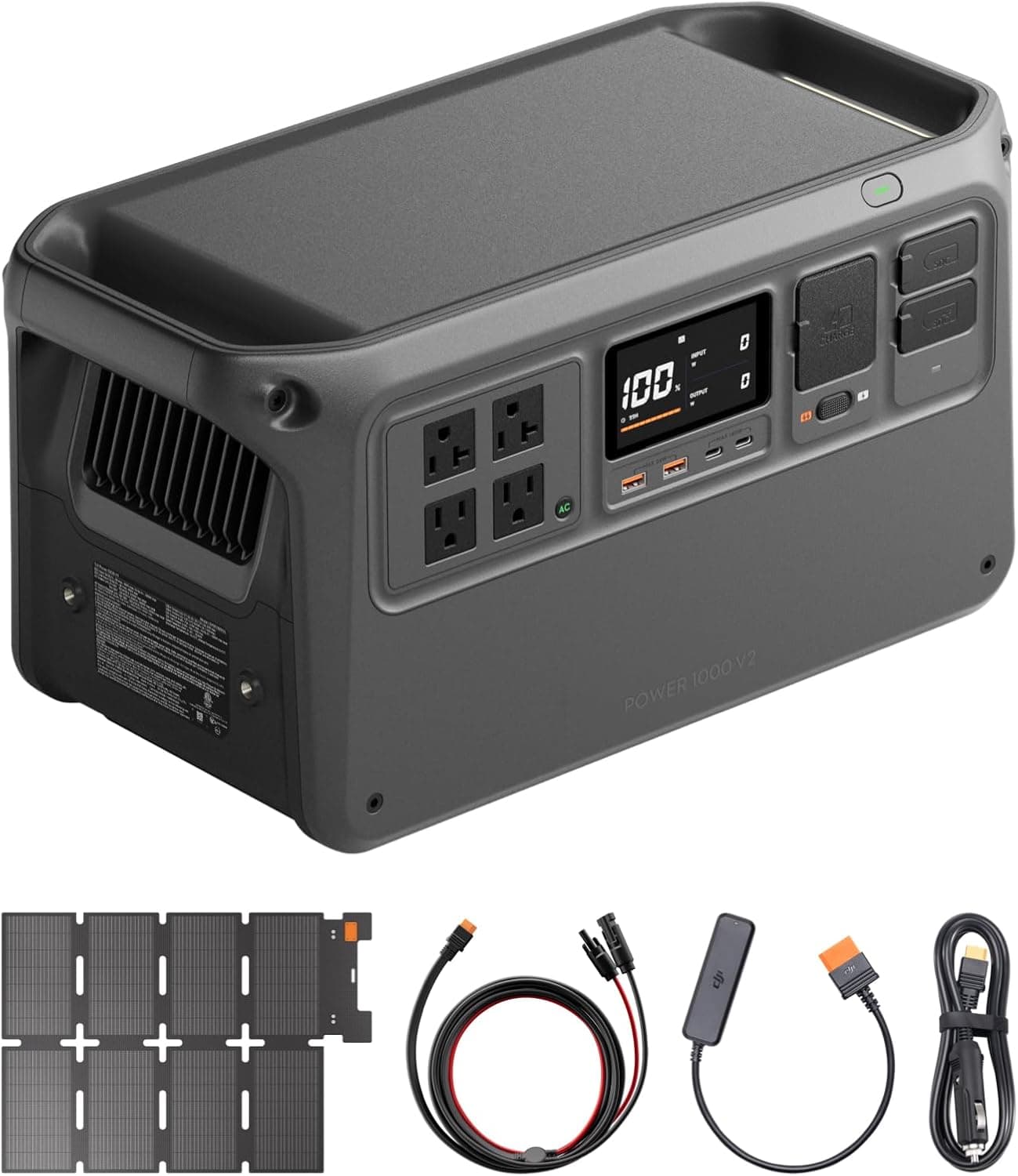
The DJI Power 2000 packs 2048Wh and 3000W for campers who want near-household power for long trips or a family basecamp.
Price range: $$$ (Premium)
What we liked
- + 3000W output handles high-draw appliances like microwaves and heaters
- + 2048Wh keeps a fridge, lights and laptops running through a long weekend
- + Big capacity can double as home backup power between trips
Trade-offs
- - Large and heavy, so it works best as a stay-in-the-vehicle unit
- - Expensive if your camp needs are just phones and a small fridge
Who the Power 2000 fits
This power station is built for people who camp out of a vehicle rather than a backpack, since a battery of this size is not something you carry to a tent site on foot. DJI positions the Power 2000 for family basecamp trips, van life and off grid stays where several devices need power at once, plus home backup during outages. If your camp needs are limited to charging a phone and running a small light, a smaller and lighter station will cost less and pack easier. But for a group running a fridge, a induction cooktop for short bursts, laptops and camera gear through a long weekend, the extra capacity buys real peace of mind instead of watching a percentage gauge drop all night. Households that already run appliances off similar stations during power cuts will find the crossover use genuinely useful rather than a marketing bullet point.
Capacity, output and ports explained
The Power 2000 holds 2048Wh in a lithium ferro phosphate, or LFP, battery pack and delivers a stable 3000W of continuous AC output, enough headroom for higher draw appliances like microwaves, space heaters or power tools that trip smaller stations. According to DJI's published specs, the unit weighs approximately 22 kilograms, about 48.5 pounds, and measures roughly 17.6 by 8.85 by 12.75 inches, closer to carry on luggage than a lightweight brick. It carries fourteen ports in total, including four AC outlets, four USB-C ports with up to 140W on the fastest pair, four USB-A ports and two SDC ports for DJI accessories. DJI rates the LFP cells for more than 4000 cycles while retaining over 80 percent of original capacity, and the station can recharge to 80 percent in about 45 minutes on AC power, which matters when you are packing up in a hurry.
Living with it at camp and at home
In daily use the appeal of a station this size is that you stop rationing power. A fridge, string lights, a fan and several device chargers can run together without close monitoring, and the fast AC recharge means a short generator or shore power session tops the battery back up between drives. DJI's app lets you monitor and control the station remotely, and a built in uninterruptible power supply mode keeps sensitive electronics running through a brief outage, a feature that carries over well from camp to garage. The trade off is that this is not something you casually move around a site once it is unpacked, so plan where it sits near the vehicle or tent before you set up. Up to ten matching expansion batteries can be daisy chained for households wanting a larger home backup system, though that scales the cost well beyond a single unit purchase.
Trade-offs against rivals like the DJI Power 1000 and BLUETTI AC180
Against smaller siblings like the DJI Power 1000 at 1024Wh and 2200W, or the BLUETTI AC180 at 1152Wh and 1800W, the Power 2000 doubles down on capacity and output at the cost of size, weight and price. Campers who mostly need overnight lighting and device charging get better value and easier handling from those smaller units. The Jackery Explorer 2000 v2 sits closer in capacity at 2042Wh and competes directly on the same use case, so the choice between them often comes down to app ecosystem, port mix and brand preference rather than a clear capability gap. Where the Power 2000 pulls ahead is output headroom, since 3000W covers appliances that would overload a 1800W or 2200W inverter. Anyone cross shopping should weigh whether they actually need that extra wattage before paying for it.
Verdict and who should pick something smaller
The DJI Power 2000 earns its place for families or crews who camp with real appliance loads, who basecamp rather than backpack, and who want a station that can double as home backup. Solo campers, ultralight setups or anyone who only needs to keep phones and a headlamp charged should look at a lighter, cheaper station instead, since the Power 2000's weight and size work against you the moment you need to carry it any real distance. Buyers focused purely on cost per watt hour should also compare it against rivals in the same guide before committing, since capacity this large is rarely the cheapest way to keep a weekend trip powered. For the right use case, though, the combination of 3000W output and a large LFP pack is hard to match without stepping up to a dedicated home battery system.
Frequently asked questions
How long can the DJI Power 2000 run a camping fridge?
With 2048Wh of capacity, it can keep a typical 12V camp fridge running for multiple days on its own, though actual runtime depends on the fridge's draw, ambient temperature and how many other devices share the battery.
Can the DJI Power 2000 run high draw appliances like a microwave?
Yes, its 3000W continuous AC output is rated to handle higher draw appliances such as microwaves and space heaters that would overload smaller 1800W or 2200W power stations.
How fast does the DJI Power 2000 recharge?
DJI's published specs list an 80 percent recharge in about 45 minutes on AC power, which is fast enough to top off between a shopping run or a short shore power stop.
Is the DJI Power 2000 too heavy to carry to a campsite?
At around 48.5 pounds it is built to travel in a vehicle rather than be carried far, so it suits car camping and van life setups better than backpacking or walk-in sites.
Prices change often, so check the current price and availability on Amazon.
Check price on AmazonCar Camp Picks may earn a commission from the link above.