How to Avoid a Dead Car Battery When Car Camping
A dead battery at a remote campsite turns a relaxing morning into a stressful one. Car camping uses the vehicle as a bedroom, which means doors open for long periods, accessories plugged in and the engine off. A few simple habits and one piece of backup gear prevent most problems.
The usual culprits
Interior dome lights left on while doors or the tailgate are open for hours are the most common cause. Many vehicles also keep modules awake when a key fob is nearby or the car thinks a door is ajar, drawing more power than you might expect.
12V fridges, phone chargers, inflators and lights plugged into sockets that stay live with the ignition off draw steadily from the starter battery. Starter batteries are designed for short bursts, not deep overnight discharge, so even modest loads can leave too little to start the engine.
Simple habits that protect the battery
Switch dome lights to off, or remove the bulb or fuse for the cargo light if your manual allows, before setting up camp. Keep the key fob away from the car if proximity keys keep systems awake.
Run camp electronics from a portable power station rather than the vehicle socket. If you must use the car battery, use a fridge or accessory with a low-voltage cutoff set high enough to leave starting power.
Carry a jump starter
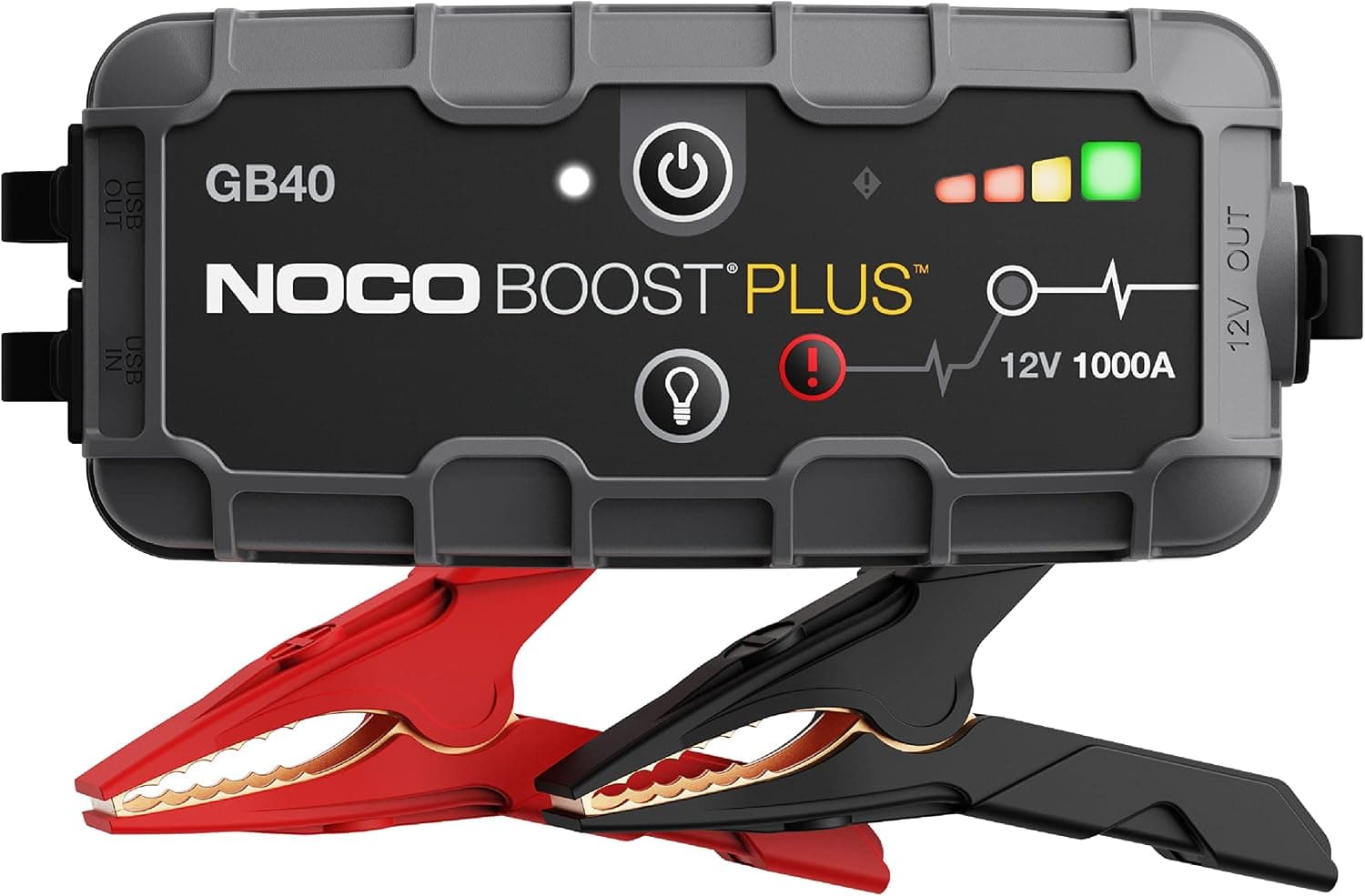
A compact lithium jump starter lets you start the car without another vehicle. Keep it charged, store it in the cabin rather than a hot or freezing trunk, and learn how your model connects before you need it.
Check the jump starter's rating suits your engine size, and top it up after each trip, since it slowly self-discharges in storage.
If the battery dies anyway
Turn off all accessories, then connect the jump starter or jumper cables following the vehicle manual, usually positive to positive and negative to a bare metal ground point. After starting, drive for at least 30 minutes to recharge.
If the car will not start after a jump, or dies again the next morning, the battery may be old or damaged. Many auto parts stores test batteries free, and batteries more than four or five years old are common failure points.
Check before long trips
Have the battery tested before a long or remote trip, especially before cold weather, which reduces available cranking power. Clean corroded terminals and make sure connections are tight.
For frequent camping, a dual battery or DC-to-DC charging setup separates camp power from the starter battery completely, so running a fridge overnight never risks your ability to drive home.